London’s Major Trauma Centres Report 15% Increase in Knife Injury Admissions
London's network of four Major Trauma Centres has recorded a deeply concerning 15 per cent increase in admissions for knife-related injuries over the past financial year, with clinicians warning that the NHS is struggling to cope with the volume and ...

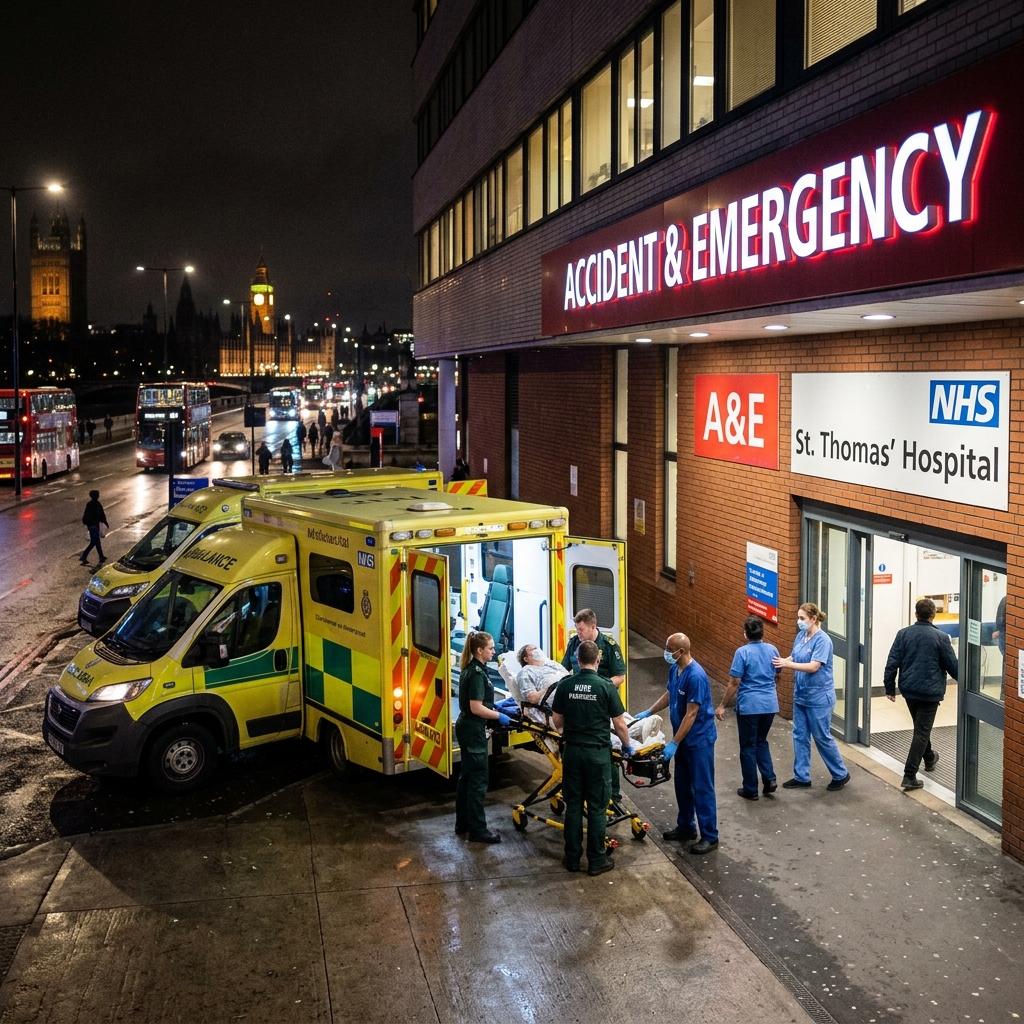
London's network of four Major Trauma Centres has recorded a deeply concerning 15 per cent increase in admissions for knife-related injuries over the past financial year, with clinicians warning that the NHS is struggling to cope with the volume and severity of wounds being treated. Data compiled from the Royal London Hospital, King's College Hospital, St George's Hospital, and St Mary's Hospital shows that 2,347 patients were admitted with stab wounds between April 2025 and March 2026, up from 2,041 in the previous twelve months.
Frontline Medics Sound the Alarm
Professor Martin Griffiths, clinical director of trauma surgery at the Royal London Hospital and the NHS's national clinical director for violence reduction, described the figures as "a public health emergency that demands a public health response." The Royal London alone treated 743 knife injury patients last year — more than two per day — with a significant proportion requiring emergency surgery for life-threatening wounds to the chest and abdomen.
"What concerns me most is the severity of injuries we are now seeing," Professor Griffiths said. "Increasingly, we are treating patients with multiple stab wounds and injuries consistent with larger, more dangerous weapons. The clinical complexity of these cases places enormous pressure on our surgical teams, our blood banks, and our intensive care capacity. On several occasions last year, we came within hours of running out of O-negative blood during mass casualty events."
Geographic and Demographic Patterns
The data reveals stark geographic disparities. Southwark, Lambeth, Newham, and Hackney recorded the highest rates of knife injury admissions per capita, while victims were overwhelmingly young males aged between 16 and 30. However, clinicians noted a worrying increase in female victims — up 22 per cent year-on-year — and in victims under 16, who now account for 11 per cent of all admissions.
Detective Chief Superintendent Ade Adelekan, the Metropolitan Police's lead for violent crime, said: "Every one of these injuries represents a failure — a failure of prevention, a failure of intervention, and a human tragedy. We are working closely with the Violence Reduction Unit, local authorities, and community organisations to tackle the root causes of knife crime, but we cannot arrest our way out of this problem."
NHS Resources Under Strain
The financial cost to the NHS is staggering. Each major trauma admission for knife injuries costs an average of £12,400 in immediate surgical care, rising to over £30,000 when rehabilitation, follow-up surgery, and mental health support are included. London Ambulance Service data shows that knife injury calls now account for approximately 3.8 per cent of all Category 1 (life-threatening) emergency responses in the capital.
Prevention and Community Response
Youth violence charities have called for sustained investment in early intervention programmes. Yvonne Lawson, founder of the Godwin Lawson Foundation, which works with young people across North London, said: "These statistics are not just numbers — they are sons, daughters, brothers, and sisters. We know that mentoring programmes, youth employment initiatives, and community-based trauma services work. But they need long-term funding, not short-term political gestures. Until we address the poverty, exclusion, and hopelessness that drive young people towards violence, these numbers will continue to rise."

MCP User
Covering accidents, safety incidents, and transport disruptions across Greater London.
A&E Waiting Times Hit Record High as London Hospitals Struggle With Surge in Accident Admissions
Carbon Monoxide Poisoning Scare Leads to Evacuation of Hackney Tower Block